Major Arcana · VIII
Strength tarot card meaning: upright and reversed
Strength is the deck’s quiet courage. It’s the kind of power that meets fear, anger or a hard moment with patience and kindness instead of force, and lasts longer because of it.
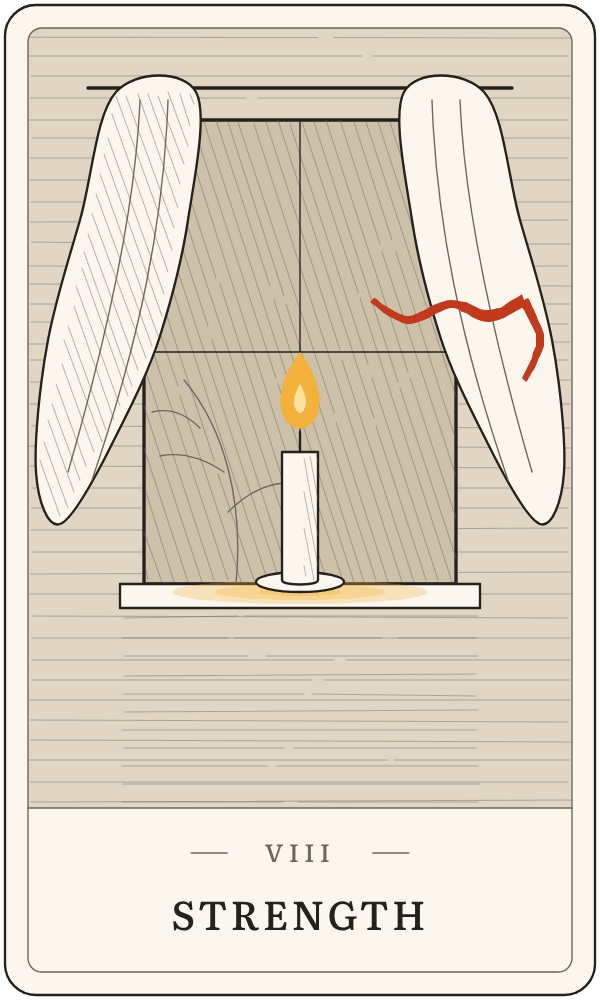
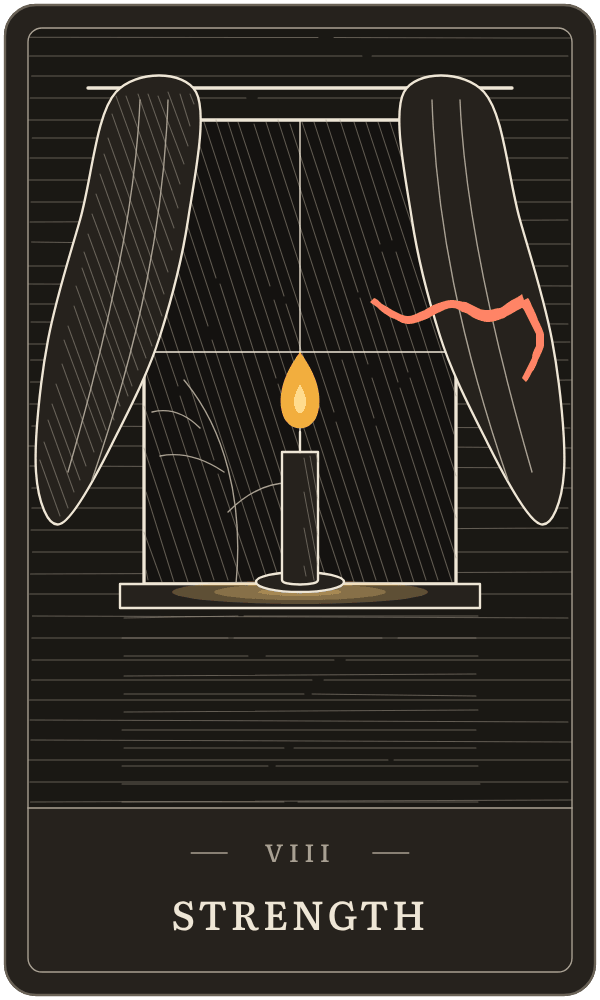
- Upright
- courage, compassion, inner strength, patience, gentle power
- Reversed
- self-doubt, insecurity, fear, raw emotion
- Yes or no
- Leans yes upright; maybe reversed
Strength upright
courage · compassion · inner strength · patience · gentle power
Strength is about quiet courage, the kind that tames fear and wild impulses through patience and kindness rather than force. It reminds you that you may be more resilient than you feel, and that gentleness can be a powerful way to meet a challenge. This card honors self-belief, compassion and steady resolve.
Upright, Strength often appears when something is testing your nerves: a difficult conversation, a stretch of waiting, an urge you’re trying not to act on. It suggests you have more steadiness than you feel, and that gentleness, toward others and toward yourself, may get you further than willpower alone.
Where could gentleness be stronger than force in your life right now?
Strength reversed
self-doubt · insecurity · fear · raw emotion
Reversed, Strength suggests you may be doubting yourself or feeling disconnected from your inner courage. Fear, frustration or strong emotions may be taking the lead, or you may simply feel worn down. The card invites you to be patient with yourself and to reconnect with what gives you steadiness.
Reversed, the hand is tired and the wind seems stronger. You may be doubting yourself, running on frustration, or simply worn down. The card isn’t asking you to be braver. It asks you to be kinder to yourself, to rest your hands, and to notice what gives you steadiness again.
What would you tell a friend who was doubting their own strength?
Strength in love
Upright
In love, Strength points to patience, warmth and a bond built on trust and understanding. It encourages compassion, for the other person and for yourself.
Reversed
In love, this can reflect insecurity, impatience or emotions spilling out in ways that cause friction. Gentleness and reassurance may help.
Strength at work
Upright
At work, it highlights calm confidence, persistence and handling difficult people or situations with grace. Your steady presence is an asset.
Reversed
At work, it may point to a dip in confidence or feeling overwhelmed by a challenge. It invites you to remember the strengths you’ve already shown.
Strength as feelings
For questions like “How do they feel about me?” The card describes a possible mood, never what someone really thinks.
Upright
A mood this card can describe: steady affection and trust, and admiration for someone’s inner strength. When have you felt that steadiness between you?
Reversed
A mood this card can describe: vulnerability or insecurity, strong feeling that’s hard to manage. How might you make it easier to talk about?
Is Strength a yes or no card?
Upright
Leans yes. Strength: quiet courage that holds steady.
Reversed
Maybe. Strength reversed: courage that needs rest before it can hold.
A lean is the card’s mood, not a verdict. Yes or no tarot can’t answer questions about health, pregnancy, money, the law or what someone else will do. Draw one card for a yes or no question, or see every card’s lean.
Strength in Lanterndeck’s deck
In traditional decks a woman gently closes a lion’s jaws, an infinity sign above her head. Lanterndeck draws a hand cupped round a candle flame, shielding it from the wind, with a vermilion thread at the wrist. Strength here is protection, not conquest: the flame survives because someone stayed patient and steady around it.
Strength in a spread
In a three-card reading
- In the past position, Strength points to a time you got through something by patience and courage.
- In the present, it suggests meeting the situation gently, with steadiness rather than force.
- As what’s coming into view, it shows confidence returning as you trust your own resilience.
In a Celtic Cross
- Crossing you, it can show self-doubt, or feelings you’re trying to wrestle down instead of understand.
- As where things are heading, it leans toward steadiness, a calm that holds.
How the positions work: the three-card spread and the Celtic Cross, position by position.
Strength with other cards
Strength and The Chariot
Will and gentleness together. Push forward, or steady yourself first?Strength and Nine of Wands
Resilience after a long effort: tired, but still standing.Strength and The Star
Courage and hope, a pair about recovering after a hard time.Strength and The Devil
Patience meeting a pull you’d like to resist. Compassion tends to work better than self-blame.
What Strength doesn’t mean
Strength doesn’t mean you have to cope alone, or keep going no matter what. It isn’t a test of how much you can bear. It points to a gentle kind of courage, and that includes asking for help.
Strength by the numbers
| In a one-card draw | 1 in 78 (1.3%) |
|---|---|
| In a three-card spread | 1 in 26 (3.8%) |
| In a ten-card Celtic Cross | about 1 in 8 (12.8%) |
| Reversed, when it turns up | about 1 in 3 in Lanterndeck’s draw |
Strength is card VIII of the Major Arcana, the ninth of its 22 steps, between The Chariot and The Hermit. With 22 Majors in a deck of 78, a three-card spread holds at least one of them about 64 times in 100.
Draw with Strength in mind
Ask your own question and draw three cards from the full deck. Strength may turn up or it may not: the draw is random, and the reading works with whatever comes.