Major Arcana · IX
The Hermit tarot card meaning: upright and reversed
The Hermit is the card of stepping back to see by your own light. It stands for chosen solitude, reflection, and the understanding you find when you turn inward for a while.
- Upright
- solitude, introspection, inner guidance, wisdom, reflection
- Reversed
- isolation, loneliness, withdrawal, avoidance
- Yes or no
- Maybe upright; leans no reversed
The Hermit upright
solitude · introspection · inner guidance · wisdom · reflection
The Hermit invites you to step back from the noise and turn inward for a while. This is a time for reflection, soul-searching and finding answers by your own light rather than in the crowd. Solitude here isn’t loneliness; it’s a chosen space to understand yourself more deeply.
Upright, the Hermit often turns up when you need time away from the noise to work something out: what you want, what you believe, what you’re tired of. It suggests quiet, a long walk, a notebook, an evening offline. The answers this card points to come from inside, and they rarely arrive in a crowd.
What might you hear if you gave yourself a little more quiet?
The Hermit reversed
isolation · loneliness · withdrawal · avoidance
Reversed, the Hermit can show solitude that has turned into isolation or withdrawal. You may be cutting yourself off from others, or avoiding the inner reflection you need. It can also suggest it’s time to come back from your retreat and share what you’ve learned.
Reversed, the lantern is either hidden or abandoned. Solitude may have tipped into isolation, or you may be keeping busy to avoid the reflection you need. Sometimes it’s the other way round: you’ve done your thinking alone, and it’s time to come back and share it. The card asks which of these is yours.
Are you resting in solitude, or hiding in it?
The Hermit in love
Upright
In love, the Hermit may point to a need for space, time alone or a slower, more thoughtful pace. If you’re single, it can be a time to understand what you truly want before seeking it.
Reversed
In love, this can reflect emotional distance, loneliness or one person pulling away. It invites gentle reconnection, without forcing it.
The Hermit at work
Upright
At work, it favors focused, independent work, study and thinking carefully about your long-term direction. A mentor or quiet reflection may help light the way.
Reversed
At work, it may point to feeling isolated or to overthinking a direction instead of trying something. Reaching out could bring a fresh perspective.
The Hermit as feelings
For questions like “How do they feel about me?” The card describes a possible mood, never what someone really thinks.
Upright
A mood this card can describe: reserve and a need for time and space, with interest that’s sincere but quiet. How comfortable are you with that pace?
Reversed
A mood this card can describe: withdrawal and difficulty opening up, more about an inner state than about you. What do you need while someone is quiet?
Is The Hermit a yes or no card?
Upright
Maybe. The Hermit: an answer found by stepping back to think.
Reversed
Leans no. The Hermit reversed: a door closed to the people who could help.
A lean is the card’s mood, not a verdict. Yes or no tarot can’t answer questions about health, pregnancy, money, the law or what someone else will do. Draw one card for a yes or no question, or see every card’s lean.
The Hermit in Lanterndeck’s deck
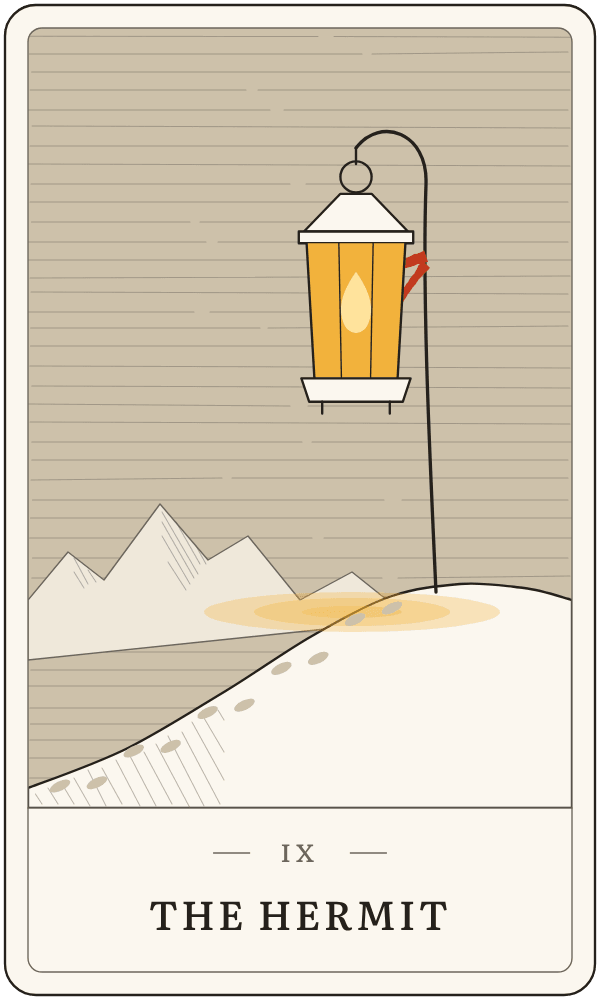
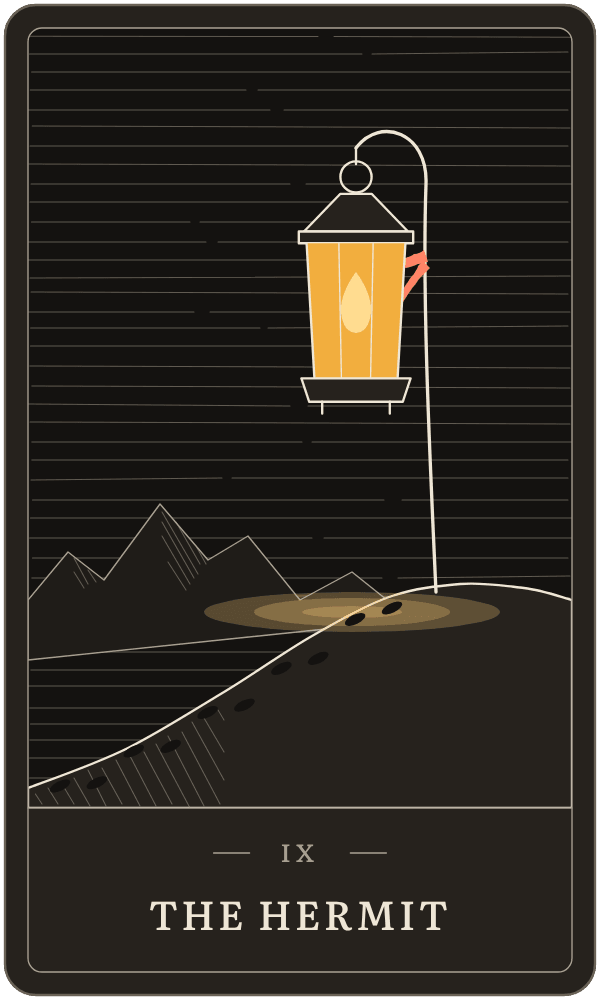
Traditional decks show a robed old man on a mountaintop, holding up a lantern with a six-pointed star inside. Lanterndeck keeps only the light. Our Hermit is the house lantern itself, hung from a staff at the top of a snowy climb, footprints leading up to it and a vermilion tie on the staff. Whoever climbed here has set the lamp down, and the light is for whoever comes next, including you.
The Hermit in a spread
In a three-card reading
- In the past position, the Hermit points to a time of retreat or reflection that taught you something you still carry.
- In the present, it suggests stepping back to think before you act.
- As what’s coming into view, it shows understanding that comes through quiet and time alone.
In a Celtic Cross
- Crossing you, it can show withdrawal from people who could help, or a reluctance to look inward.
- As where things are heading, it leans toward clarity found on your own terms.
How the positions work: the three-card spread and the Celtic Cross, position by position.
The Hermit with other cards
The Hermit and The High Priestess
Two inward cards: a strong signal to trust quiet reflection over outside opinion.The Hermit and Four of Swords
Rest as well as reflection. The pair often asks for a real pause.The Hermit and The Fool
Retreat and adventure. Perhaps a journey that’s as much inner as outer.The Hermit and The Star
A light found in solitude, a hopeful pair after a hard stretch.
What The Hermit doesn’t mean
The Hermit doesn’t mean you’ll be alone, or that a relationship is ending. It describes a need for reflection, often a temporary and healthy one. Solitude in this card is a lamp you carry, not a sentence you serve.
The Hermit by the numbers
| In a one-card draw | 1 in 78 (1.3%) |
|---|---|
| In a three-card spread | 1 in 26 (3.8%) |
| In a ten-card Celtic Cross | about 1 in 8 (12.8%) |
| Reversed, when it turns up | about 1 in 3 in Lanterndeck’s draw |
The Hermit is card IX of the Major Arcana, the tenth of its 22 steps, between Strength and Wheel of Fortune. With 22 Majors in a deck of 78, a three-card spread holds at least one of them about 64 times in 100.
Draw with The Hermit in mind
Ask your own question and draw three cards from the full deck. The Hermit may turn up or it may not: the draw is random, and the reading works with whatever comes.