Palm reading · a beginner’s guide
Palm reading lines: a beginner’s guide to reading your palm
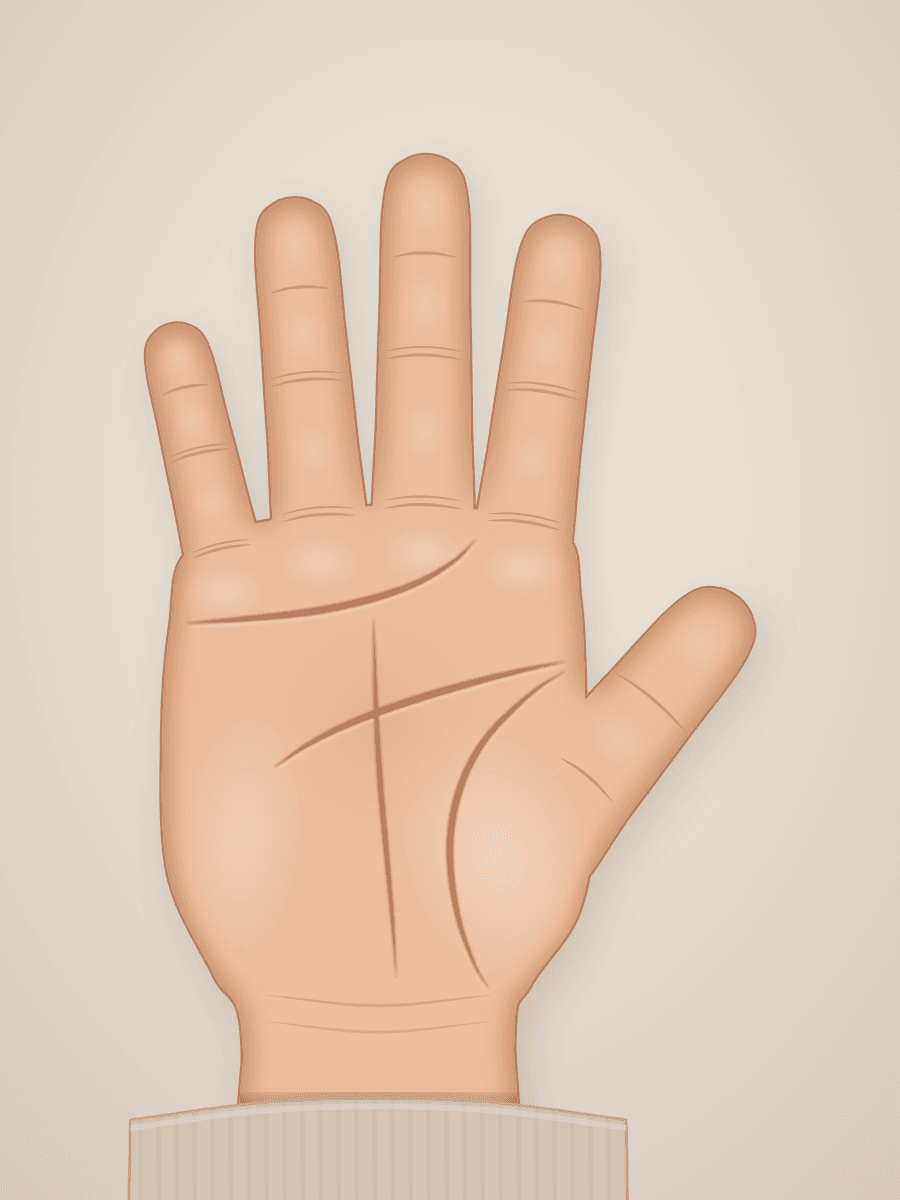
Your palm has four main lines: heart, head, life and fate. This guide shows where each one runs, what palm readers traditionally see in it, how to read your own hand step by step, and what palm reading can and can’t tell you.
What palm reading is, and what it isn’t
Palm reading, or palmistry, is an old way of reading character from the hand: its lines, its shape and the pads of flesh beneath the fingers. It has roots in several traditions and was popular in Europe by the nineteenth century, when many of the meanings used today were written down.
Treat it the way Lanterndeck does: as a mirror for reflection and a bit of fun, not a science. The lines on your palm are skin creases that form where your hand folds. They don’t predict events, and they say nothing about your health or how long you’ll live.
Which hand do you read?
Palm readers usually read your dominant hand, the one you write with, as the story of who you are now and what you’ve made of yourself. The other hand is read as your natural tendencies, the temperament you started with.
If you’re new to this, start with your dominant hand. Comparing the two later is half the fun: where the lines differ, palm readers see the places you’ve changed.
The four main lines
Heart line
The highest of the four, running across the palm just below the fingers, from the little-finger edge toward the index finger. It describes your emotional life: how openly you show feelings and what you need from the people close to you. A line that curves up toward the fingers is read as warmth shown freely; a level line as emotional steadiness.
Head line
Below the heart line, starting near the thumb and running across the middle of the palm. It describes how you think: a sloping head line is read as imagination, a level one as practical logic, a long one as thoroughness and a short one as quick, direct thinking.
Life line
The curve around the base of the thumb. It describes energy and vitality: a wide arc is read as an outgoing, adventurous temperament, a line close to the thumb as a more inward, home-loving one. It is never read as the length of your life.
Fate line
The vertical line up the center of the palm toward the middle finger, when there is one. It describes direction and purpose. Many hands have no clear fate line, which palm readers read as a path you make as you go.
The lines, trait by trait
Lanterndeck’s scanner reads the same traits a palm reader looks at first. Each one links to its traditional meaning.
| Line | Trait | What it can show |
|---|---|---|
| Heart line | How long it is | long, medium, short |
| Curved or fairly straight | curved, fairly straight | |
| How it ends | curving up toward the fingers, running level | |
| Head line | How long it is | long, medium, short |
| Sloping or level | sloping down, fairly level | |
| Curved or fairly straight | curved, fairly straight | |
| Life line | How wide its arc is | a wide arc, close to the thumb |
| How clear it is | clear, faint | |
| Fate line | How clearly it shows | clear, faint, not visible |
| How high it rises | rising high, rising part way |
Hand shapes: earth, air, fire and water
Before the lines, many palm readers look at the shape of the whole hand. The classic system sorts hands into four types named after the elements, from two measurements: the shape of the palm (about square, or longer than it is wide) and the length of the fingers compared with the palm.
To check yours, compare the width of your palm across the knuckles with its length from the wrist crease to the base of your middle finger. Then compare your middle finger with your palm: if it’s nearly as long as the palm, call your fingers long. Lanterndeck’s scanner reports a hand shape with every scan.
| Hand | Shape | Traditionally read as |
|---|---|---|
| Earth hand | Square palm, short fingers | Practical, steady and hands-on. Earth hands are read as people who like to make and fix things, trust what they can see, and show care through action. |
| Air hand | Square palm, long fingers | Curious, communicative and analytical. Air hands are read as people who live in ideas and conversation, need variety and think things through out loud. |
| Fire hand | Long palm, short fingers | Energetic, spontaneous and enthusiastic. Fire hands are read as people who act on instinct, start things with a rush and bring warmth into a room. |
| Water hand | Long palm, long fingers | Sensitive, intuitive and imaginative. Water hands are read as people who feel things deeply, notice what others miss and need quiet to recharge. |
The mounts of the palm
The fleshy pads on your palm are called mounts, and each is named after a planet in old palmistry. The mount of Venus, at the base of the thumb, is read as warmth and love of life. The mount of the Moon, low on the opposite side, is read as imagination.
Under the fingers sit Jupiter (index finger: ambition and confidence), Saturn (middle finger: responsibility), Apollo (ring finger: creativity) and Mercury (little finger: communication). A full, rounded mount is read as that quality in good supply; a flat one as a quality you use less. Mounts are subtle in a photo, so most beginners start with the lines.
Other lines and marks
Beyond the four main lines, palm readers name many smaller ones. The best known is the sun line (or line of Apollo), a short vertical line under the ring finger, read as creativity and the pleasure you take in your work. Small horizontal creases on the outer edge below the little finger are often called relationship lines, and are read as close bonds, never as a count of marriages or anything else.
Two features have pages of their own: the simian line, where heart and head lines run as one, and the M on your palm, a letter drawn by four lines meeting.
Some charts also show a so-called health line and lines around the wrist said to show health or long life. We leave them out. Palm reading says nothing about health or about how long anyone lives.
How to read your own palm, step by step
- Choose your hand. Use your dominant hand for who you are now. Hold it in good daylight, palm up, fingers relaxed.
- Look at its shape. Square or long palm, short or long fingers: that gives you the hand type, the background to everything else.
- Find the heart line. The highest crease. Notice its length, whether it curves, and how it ends: rising toward the fingers or running level.
- Find the head line. Below the heart line, from the thumb side. Notice its length and whether it slopes down or runs level.
- Find the life line. The curve around your thumb. Notice how wide its arc is, and whether it’s clear or faint. Ignore its length as a measure of anything.
- Look for a fate line. A vertical line up the middle. Clear, faint or absent are all common. Notice where it starts and how high it rises.
- Read them together. A reading is the lines in conversation: an expressive heart line with a practical head line tells a different story from two expressive ones. Write down what rings true, and leave the rest.
How to photograph your palm
- Use daylight from a window, not the flash. Glare hides the finer creases.
- Hold your palm flat and open, fingers together but relaxed, the whole hand and a little of the wrist in the frame.
- Keep the phone parallel to your palm, about a forearm’s length away, and tap to focus on the center of the palm.
- Use your dominant hand, the one you write with, unless you want to compare both.
- A plain background helps. Your photo is read once and deleted, never kept.
For a clear photo
- Palm facing the camera
- Fingers relaxed, a little apart
- Soft, even light, no flash
- Your whole hand in the frame
Take a photo or choose one. It stays on this device: read here, in your browser, never uploaded and never kept.
What palm reading can’t tell you
Palm reading can’t tell you how long you’ll live, whether you’re healthy, whether you’ll marry or have children, how much you’ll earn or what will happen next. No line predicts events, and anyone who tells you otherwise is selling something.
What it can do is give you a vocabulary for reflection: a way to look at your temperament from a fresh angle, and a few good questions about how you think, love and spend your energy. That’s how Lanterndeck reads palms.
Every line and feature, in depth
- Life line
The life line is the curved crease that sweeps around the base of your thumb.
- Heart line
The heart line is the highest of the major lines, running across the top of your palm just below the fingers.
- Head line
The head line runs across the middle of your palm, below the heart line.
- Fate line
The fate line runs up the center of the palm toward the middle finger.
- Simian line
A simian line is a single crease running straight across the palm, where the heart line and head line appear as one.
- M on your palm
Look at your palm and you may see a letter M drawn in its creases.