Palm reading · one of the four main lines
Head line: what it says about how you think
The head line runs across the middle of your palm, below the heart line. In palm reading it describes your thinking style: how you weigh decisions, whether you lean toward logic or imagination, and how you focus.
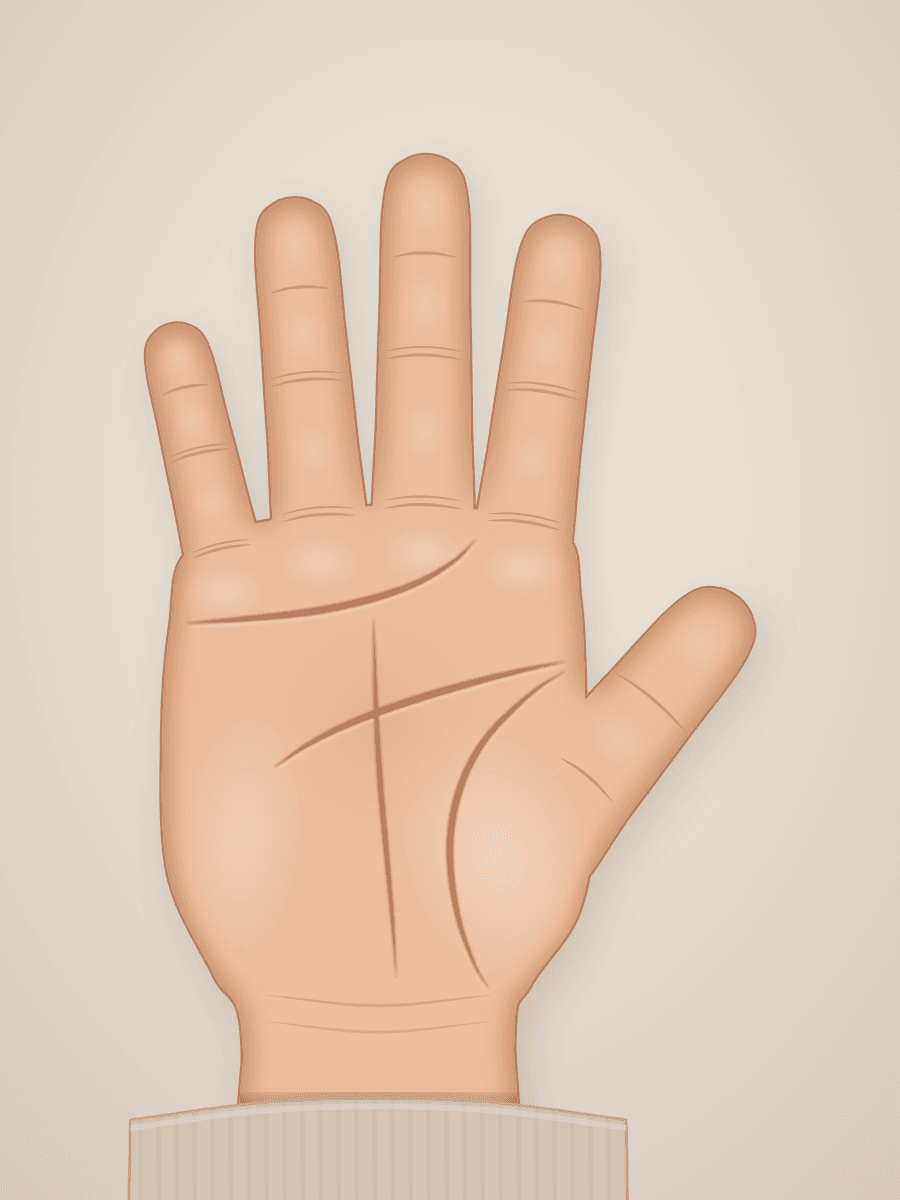
Where to find your head line
Start at the thumb side of your palm, between the thumb and index finger, where the head line often begins together with the life line. Follow it across the middle of the palm toward the little-finger edge.
It may run almost straight across, or slope down toward the fleshy outer edge of the palm. Its length and its slope are the two things palm readers look at first.
How long it is
The scanner measures how far the head line runs across the palm.
Long
A long head line is traditionally read as thoroughness: you like to see a question from every side before you decide, and you enjoy ideas for their own sake. The flip side, palm readers say, is a tendency to overthink.
Medium
A head line of medium length is read as practical, balanced thinking: enough reflection to choose well, enough decisiveness to get on with it.
Short
A short head line is read as quick, direct thinking: you trust your first read, prefer doing to deliberating and get bored by long debates. It is never read as a measure of intelligence.
Sloping or level
The scanner reports whether the line slopes down toward the outer edge of the palm or runs fairly level.
Sloping down
A head line that slopes down toward the lower outer palm is traditionally read as imagination: a creative, intuitive mind that thinks in pictures and possibilities and is drawn to stories, art and invention.
Fairly level
A level head line is read as a practical, logical mind: realistic, organized and good with plans, facts and systems.
Curved or fairly straight
The scanner reports whether the line bends along its length or runs fairly straight.
Curved
A curving head line is read as flexible thinking: you adapt your plans, change your mind when the facts change and enjoy creative problems.
Fairly straight
A straight head line is read as methodical thinking: steady, structured and consistent, someone who finishes what they start.
Where it starts
If your head line begins joined to the life line, palm readers see a careful thinker who likes to be sure before acting. If there’s a clear gap between them, they read independence of mind and a willingness to take a chance.
Head line and heart line together
Read the head line against the heart line above it. If the head line is the longer and clearer of the two, palm readers say reason tends to lead; if the heart line dominates, feeling does. Most hands sit somewhere between, and that balance is often the most interesting part of a reading.
Forks and breaks
A fork at the end of the head line, sometimes called the writer’s fork, is read as the ability to see two sides of a question, and a gift for putting ideas into words. A break is read as a change in how you think: a new field, a new outlook, a lesson that rearranged things.
What the head line can’t tell you
It can’t measure intelligence, predict exam results or tell you which career to choose. It offers a way to think about how you think. If you’re weighing a work decision, a career tarot reading can give you questions to sit with.
Before you take the photo
- Use daylight from a window, not the flash. Glare hides the finer creases.
- Hold your palm flat and open, fingers together but relaxed, the whole hand and a little of the wrist in the frame.
- Keep the phone parallel to your palm, about a forearm’s length away, and tap to focus on the center of the palm.
- Use your dominant hand, the one you write with, unless you want to compare both.
- A plain background helps. Your photo is read once and deleted, never kept.
Scan your palm to see your head line
- Palm facing the camera
- Fingers relaxed, a little apart
- Soft, even light, no flash
- Your whole hand in the frame
Take a photo or choose one. It stays on this device: read here, in your browser, never uploaded and never kept.
More palm lines
- Heart line
The heart line is the highest of the major lines, running across the top of your palm just below the fingers.
- Life line
The life line is the curved crease that sweeps around the base of your thumb.
- Fate line
The fate line runs up the center of the palm toward the middle finger.
- Simian line
A simian line is a single crease running straight across the palm, where the heart line and head line appear as one.
- The beginner’s guide to palm reading lines
All four lines on one chart, hand shapes, the mounts and how to read your own palm.